Blog by Screen Printing Vancouver, 1065 Main Street, Vancouver, BC | Last updated: September 2026
The right printing method depends on your order size, artwork, fabric, timeline and budget, not on one method being better than the rest. We at Screen Printing Vancouver can help printing t-shirts using DTG, DTF, heat transfer and embroidery from one shop at 1065 Main Street near Main Street–Science World, so we can match the method to the job instead of fitting your job to a single machine. For more information, contact us at 604-558-1877 or iidowntown@gmail.com.
What Is Screen Printing and How Does It Work?
Screen printing pushes ink through a stencil, called a screen, onto the garment. Each colour in the design needs its own screen, which is why setup is a real cost on a first order and why simple, bold artwork often suits it well. The ink sits on the surface in thick layers, so colours stay dense and consistent across a large run and generally hold up through repeated washing when cared for properly.
Screen setup is a one time charge spread across the order, so the per unit cost usually drops as quantities rise, and reorders of the same design are often cheaper than the first run.
What Other Printing Methods We Can Use for Your T-shirts Printing in Vancouver?
Direct to garment (DTG) prints ink straight into the fibres using a specialized printer, much like an inkjet designed for fabric. There are no screens, so photographs, gradients and unlimited colours carry no extra setup. It performs best on cotton, since the ink needs absorbent fibres to bond properly, and dark garments require a pre-treatment step before printing.
Direct to film (DTF) prints the design onto a coated film, applies an adhesive powder, then heat presses the result onto the garment. Because the design is not bonding directly with the fibres, DTF handles a wider range of fabrics and blends than DTG, and it holds fine detail well. It is often the practical answer for detailed artwork on polyester or tri-blend garments.
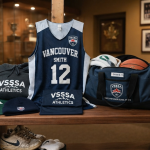
Heat transfer vinyl cuts shapes from sheets of coloured vinyl and bonds them to the garment with heat and pressure. Each colour is a separate cut and application, so intricate artwork becomes impractical quickly. Where it earns its place is piece by piece personalization: names, numbers and individual titles that change on every garment.
Dye sublimation uses heat to turn dye into a gas that bonds with the fibres themselves rather than sitting on top of them. The result has no surface texture at all and cannot crack or peel. The constraint is real, though: it needs light coloured, polyester heavy fabric, and it will not hold on cotton.
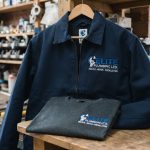
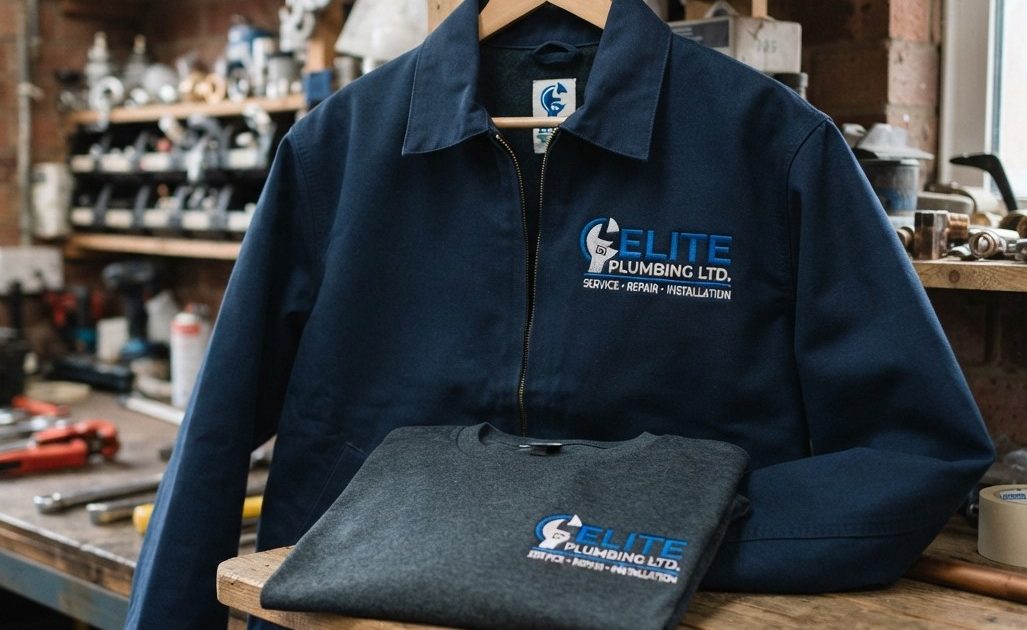
Embroidery stitches the design into the fabric with thread rather than printing it. Artwork has to be digitized into stitch paths first, which is a one-time setup cost similar in principle to screens. Fine lines, small text and subtle gradients do not translate well, but for clean logos on polos, caps and workwear the finish is durable and reads as more formal than print.
Not sure which of these fits your garment? Describe it on our custom t-shirt printing page and we will tell you what you would use and why.
Can One Order Use More Than One Method?
Yes, and mixed orders are common. A team package might use screen printing for the main logo on tees, heat transfer vinyl for individual player names, and embroidery on caps, all quoted and produced as a single job.
The reason this matters is that choosing a method is rarely an either-or decision across a whole order. It is usually a decision per garment type and per design element. Grouping those decisions when you place your group order with us keeps colour matching consistent across the set, which is harder to control when different pieces are printed by different shops.
What Affects the Cost of a Custom T-Shirt Order?
Per shirt price is only part of the picture. These are the variables that actually move a quote:
- Setup charges. Screens for screen printing, or digitizing for embroidery. Usually one time, so reorders cost less.
- Quantity. Screen printing per unit cost drops meaningfully as volume rises. DTG and DTF stay comparatively flat, which is why they often win on small runs.
- Colour count. Each colour is a screen, and a dark garment may add an underbase screen on top of that.
- Garment choice. The blank itself is often the largest single line item. Fabric weight and brand affect both price and how the finished print looks.
- Turnaround. Rush production is possible on many products but generally carries a premium.
- Placement count. A front print, a back print and a sleeve print are three separate operations, not one.
When you compare quotes from different shops, ask whether setup is included in the number you have been given. That single question accounts for most of the confusion we see.
How Our Team at Screen Printing Vancouver Can Help You Choose the Right T-shirt Printing Method for Your Order?
Most orders come down to four questions: how many pieces you need, what the artwork looks like, what the garment is made of, and when you need it. A twelve-piece run with a photographic design and a two hundred piece run with a two-colour logo can point to different methods, and some orders combine methods, such as a printed base with vinyl names added.
We have been printing in Vancouver for over twelve years and hold a 4.7 rating across 235 reviews. Much of our work involves talking a client out of the method they arrived with when another one fits the job better. Looking for custom t-shirts for your team, place your order here.
What Are Vancouver Groups Ordering This Fall?
Fall apparel requests have been steady across the Lower Mainland, including North Vancouver, West Vancouver and Burnaby. Sports clubs and student clubs are ordering team tees and hoodies for the new season, corporate teams are outfitting staff for conferences and year end events, and restaurants and cafés are refreshing front of house shirts and aprons.
Orders like these often mix printing and embroidery across the same list of garments, and most of them come with a fixed date attached. If your group has something on the calendar this season, it is worth starting the conversation before the artwork is finalized rather than after.
Frequently Asked Questions About T-shirt Printing in Vancouver
Does Screen Printing Vancouver take minimum order for custom t-shirts?
Minimums depend on the method. Screen printing generally needs enough pieces to justify screen setup, while DTG and DTF can run in very small quantities, including single pieces. Tell us your quantity and we will confirm what is workable.
How long does custom t-shirt printing take in Vancouver?
Standard turnaround is commonly three to five business days once artwork is approved, though it varies with quantity, method, garment availability and our production schedule. Rush and same day service is available for select products and quantities. Confirm your deadline when you request a quote so we can tell you what is realistic.
What artwork files does Screen Printing Vancouver need?
Vector files such as AI, EPS or PDF reproduce most reliably, particularly for screen printing and embroidery. High resolution PNG or TIFF can work for DTG and DTF. Low resolution web images, screenshots and AI generated images are usually not print ready, since they lack the clean edges and colour separations the process needs. If your file is not ready, our team can often redraw it.
Can Screen Printing Vancouver print on polyester and blended fabrics?
Yes, though the method matters. Screen printing and DTF handle blends well, DTG performs best on cotton, and dye sublimation needs light coloured, polyester heavy fabric. Tell us the garment you have in mind and we will match the method to it.
Can one order combine printing and embroidery?
Yes, and it is common. A team order might use screen printing on tees, embroidery on caps and vinyl for individual names, all coordinated as a single job with consistent colour matching across the set.
Why Work with Screen Printing Vancouver?
We keep printing, embroidery and finishing under one roof in Vancouver, so quoting and production stay coordinated and you have one point of contact for the whole order. That also means the method recommendation you get is based on what suits your garment, quantity and deadline rather than on which machine happens to be free.
Tell us your budget, timeline and purpose and we will tell you which method fits your project, and which one does not.